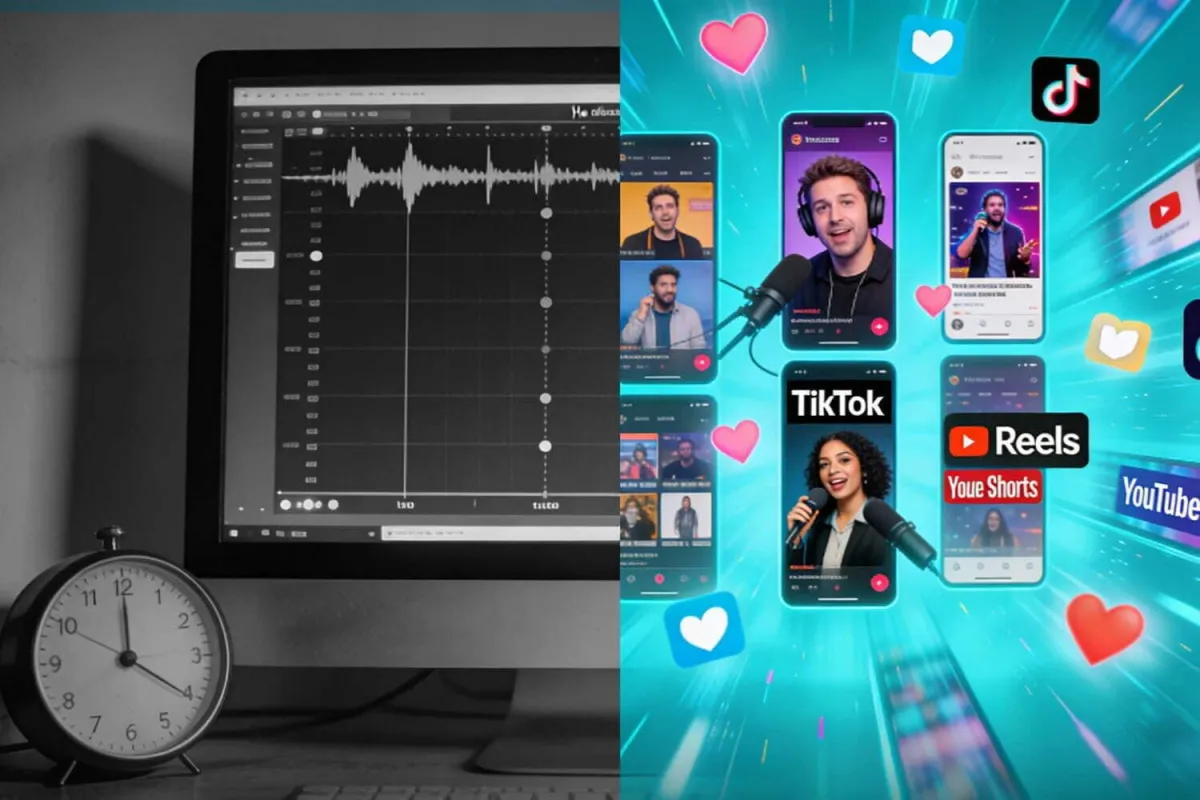
Build Your Personal Brand Using Your Cloned Voice Without Recording a Single Podcast by Yourself
Your expertise deserves a platform. Learn how to use done-for-you AI podcast services using your cloned voice to build personal authority without the weekly recording burden.
There was a time when personal branding felt like something reserved for influencers, speakers, and people who enjoyed being in the studio for recording or on camera for an interview.
That time is gone.
Today, whether you're a founder running a growing company, a consultant selling expertise, a coach building a practice, an executive leading a team, or a specialist with deep knowledge in your field, people want to know who stands behind the work before they commit to anything.
They search your name before they reply to your email. They scan for your ideas before they book the call. They measure your authority against competitors they've never met. They notice who shows up consistently and who remains invisible.
This shift means your personal brand now quietly influences nearly every meaningful business outcome. Trust forms faster or slower depending on what people find. Leads warm up or go cold based on perceived credibility. Partnerships materialize or dissolve around reputation signals. Pricing power expands or contracts with recognition. Opportunities find you or pass you by. Industry standing rises or stagnates.
The stakes are clear. Visibility compounds. Invisibility costs.
But here's where the whole conversation typically breaks down.
Most professionals I talk to already know this. They understand that showing up matters. They recognize that content creates credibility. They genuinely want to build a stronger presence.
And then reality hits.
There's no time to record weekly episodes. There's no energy left after running the actual business. There's no desire to become a part-time content creator when you already have a full-time job being excellent at what you do.
That tension between knowing what you should build and having the bandwidth to build it has kept countless talented people stuck in obscurity.
This is where the conversation needs to shift from "try harder" to "try smarter."
Using your cloned voice to create a podcast-based personal brand removes the bottleneck that stops most professionals before they start. You don't record. You don't edit. You don't wrestle with audio software at midnight, wondering why you thought this was a good idea.
Instead, a production team handles everything while your voice and your expertise carry the conversation. Authority builds in the background. Visibility grows while you sleep. And you stay focused on the work that made you worth listening to in the first place.
Let me walk you through exactly how this works and why it changes the math on personal branding entirely.
Why Personal Branding Matters More Than Ever
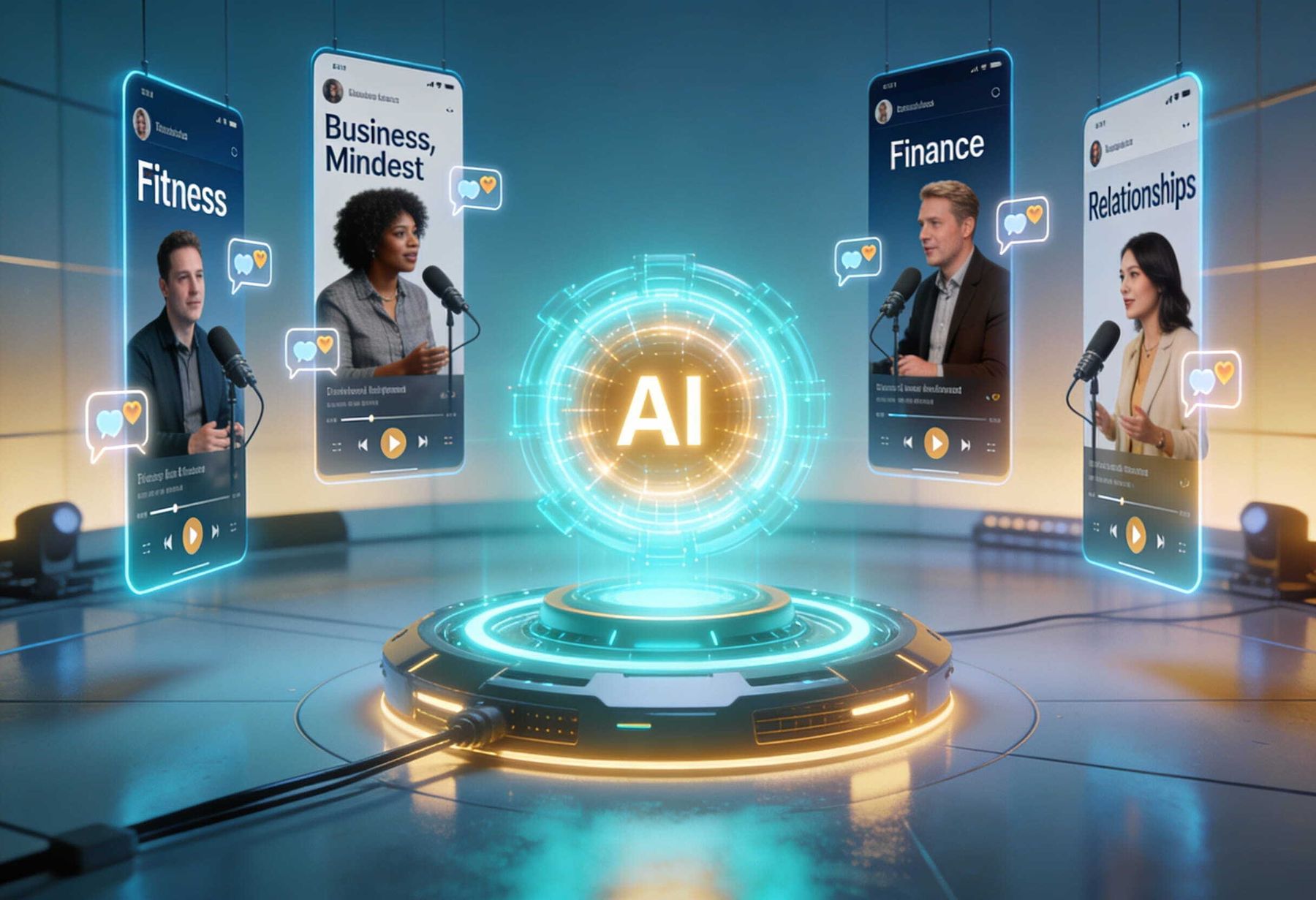
People buy from people. This isn't a new insight, but the way it plays out has intensified dramatically.
Even when someone ultimately signs a contract with a company, they almost always attach their trust to a person first. The founder whose story resonates. The consultant whose framework makes sense. The executive whose perspective they've come to respect through repeated exposure.
A strong personal brand does several things simultaneously that generic company marketing simply cannot match.
It positions you as the known expert in a sea of interchangeable options. When prospects can't tell the difference between five similar service providers, they default to the one they've heard of. Personal branding creates that familiarity.
It establishes you as the trusted option before the first conversation happens. Trust used to be built primarily through referrals and direct experience. Now it's increasingly built through content consumption. By the time someone reaches out, they've already decided whether they trust you based on what they've seen and heard.
It makes you a memorable voice in your market. Most professionals are forgettable, not because they lack skill but because they never give the market anything to remember them by. Consistent presence creates memory. Memory creates opportunity.
It positions you as the premium choice over unknown competitors. When two businesses offer comparable services, the one with stronger authority signals almost always commands higher prices and shorter sales cycles. The market assumes expertise is worth more.
In crowded industries where capabilities look similar on paper, visibility often becomes the deciding factor. Not because it's fair. Because it's how human decision-making actually works.
Why Most Professionals Never Build a Personal Brand
The gap between understanding that personal branding matters and actually building one is where most careers stall out.
It's not a knowledge problem. Most talented professionals know they should be more visible. They've read the articles. They've watched peers pull ahead. They feel the weight of invisibility every time a competitor wins attention they deserved.
It's a capacity problem disguised as a motivation problem.

Time disappears into running the business. Every week, there's a genuine intention to create something, and every week, client demands, team issues, operational fires, and sheer exhaustion consume the available hours. Personal branding gets pushed to "someday" that never arrives.
Consistency collapses under pressure. The typical pattern is predictable. Post actively for two weeks. Life gets busy. Disappear for two months. Feel guilty. Repeat. This sporadic presence actually undermines credibility more than complete silence would.
Content strategy remains fuzzy. Many professionals sit down to create something and immediately hit a wall. What should they talk about? What actually matters to their audience? What won't sound like everyone else saying the same obvious things?
Genuine discomfort with recording exists. Plenty of brilliant people simply dislike microphones, cameras, or the pressure of speaking on schedule. They didn't sign up to be broadcasters. They signed up to be excellent practitioners.
And always, always, there are too many competing priorities. Sales conversations that need to happen. Team members who need direction. Operations that need attention. Service delivery that can't slip. Personal branding feels important but never urgent, so it perpetually waits its turn.
This is why so many highly qualified experts remain largely unknown. Not because they lack value to share. Because the path to sharing it asks too much of them.
Why Podcasting Builds Authority Faster Than Other Formats
Different content formats create different relationships with an audience.
Podcasting does something unique. It creates the experience of a relationship at scale.
When people hear your voice regularly sharing insights that matter to them, working through problems they recognize, and demonstrating how you think about complex situations, familiarity forms quickly. You stop being an abstract brand or a name on a website. You become someone they feel like they know.
That familiarity converts directly into credibility. Not because you've claimed expertise. Because you've demonstrated it consistently over time through the depth and quality of your thinking.
The long-form nature of podcast content also enables a level of depth that shorter formats simply can't accommodate. You can unpack industry trends with the nuance they deserve rather than reducing everything to oversimplified sound bites. You can explore common client mistakes and why they happen rather than just stating that they exist. You can debunk persistent myths with actual reasoning rather than just contradicting them. You can share strategic advice that accounts for context and complexity rather than offering one-size-fits-all prescriptions. You can tell success stories that illustrate principles in action rather than just listing achievements. You can introduce frameworks that help people think differently about familiar problems.
This depth positions you as someone who genuinely understands real problems, not just someone selling services. The distinction matters enormously in trust-based industries.
The Problem With Traditional Podcast Creation
The idea of having a podcast is appealing. The reality of producing one is where enthusiasm goes to die.
The workflow sounds manageable when described in a bullet point. Plan topics. Write outlines. Schedule recording time. Actually record. Notice mistakes. Re-record sections. Edit audio files. Write descriptions. Publish episodes. Promote across channels. Repeat every single week without fail.
In practice, this becomes a second job that demands skills most professionals never wanted to develop. The recording setup alone creates friction. Finding quiet time. Getting in the right mental space. Dealing with the inevitable technical hiccups.
Then there's editing. Hours of listening to your own voice, cutting out pauses, removing verbal stumbles, balancing levels, adding intros and outros. It's tedious work that requires patience, which most busy people don't possess.
Publishing and promotion add another layer. Writing show notes that actually get clicks. Creating titles that stand out in crowded directories. Distributing across platforms. Sharing each episode without feeling like you're constantly asking for attention.
And you have to do all of this while maintaining consistency week after week, month after month. During busy seasons. During low-energy periods. During times when you'd rather do literally anything else.
Most podcasts don't fail because podcasting doesn't work. They fail because the process asks too much of people who already have full plates. The value proposition collapses under the weight of execution.
How Cloned Voice Podcast Services Solve the Core Problem
This is where the approach fundamentally shifts.
Instead of adding another demanding responsibility to your already full schedule, you leverage technology and production expertise to create presence without a personal production burden.
Your voice model is created ethically with your explicit permission. This isn't about generating content you didn't approve or putting words in your mouth. It's about capturing your vocal signature so that content built around your actual expertise and perspective can be delivered in a way that sounds authentically like you.
Once that foundation exists, a production team handles everything else. Topic research that aligns with your positioning and audience interests. Script development that captures not just information but your unique way of thinking about problems. Voice production that delivers professional quality audio without you ever sitting down at a microphone. Editing and post-production that polishes everything to broadcast standards. Publishing across relevant platforms. And consistency planning that ensures momentum builds rather than stalls.
You remain the voice of the brand in the most literal sense. Your expertise shapes the content. Your perspective drives the insights. Your vocal identity delivers the message.
But you're freed from the production treadmill that consumes time, energy, and ultimately enthusiasm.
For professionals who want authority without creator burnout, services like AutoMinds Tech's authority-building service provide the solution to make this possible.
How to Build a Personal Brand Without Recording Yourself
The practical path forward follows a clear sequence that starts with strategy and ends with ongoing presence.
First, define your positioning with precision. What specifically should people know you for? Not a vague category like "business expert" but a clear territory you can own. Business growth strategist for professional services. Real estate investment advisor for high-net-worth individuals. Healthcare operations leader for independent practices. Legal advisor for technology companies. Marketing authority for B2B service firms. The more specific your positioning, the easier it becomes to create content that resonates.
Second, identify what your audience actually wants answered. Not what you wish they cared about. What questions come up repeatedly in your actual conversations with clients and prospects? What confuses them? What keeps them up at night? What do they need to understand before they're ready to work with someone like you?
Third, build content themes that create structure for ongoing episodes. Mistakes to avoid in your industry. Updates on changes that affect your clients. How to educate that builds competence. Guidance for buyers navigating important decisions. Success frameworks that help people think more clearly about familiar problems. Themes create consistency without requiring constant reinvention.
Fourth, commit to consistent publishing, whether weekly or monthly. Authority accumulates through reliable presence, not occasional bursts of activity followed by long silences. The market rewards show up predictably.
Fifth, repurpose everywhere. Each episode becomes raw material for multiple channels. Blog content that improves search visibility. Social clips that capture attention in feeds. Email content that nurtures existing relationships. Trust assets that live on your website. Sales conversation starters that warm up prospects before calls.
This is how one voice becomes a multi-channel brand engine without requiring you to become a full-time content operation.
What Kind of Content Actually Builds Trust
Not every topic serves the goal of building authority. Some content merely fills time without moving the needle.
Focus on material that demonstrates your understanding of problems your audience actually faces. What keeps them up at night? What mistakes do they make before hiring someone like you? What should they understand before making important decisions?
Explore industry myths that persist despite evidence. Taking a clear stance on misunderstood topics signals independent thinking and genuine expertise.
Share smart strategies that reflect your unique approach. Not generic advice anyone could Google. The specific frameworks and mental models you've developed through actual experience.
Address common mistakes you see repeatedly. This demonstrates pattern recognition that only comes from depth of practice.
Offer a perspective on future trends that affect your clients. Showing you think about what's coming, not just what's already happened, positions you as forward-looking rather than reactive.
Provide behind-the-scenes visibility into how you actually think about problems. This is often more valuable than polished conclusions. People want to understand your process, not just your outputs.
The goal isn't to impress people with how much you know. It's to help them think more clearly about problems they care about. Helpful experts become trusted experts. Trusted experts get hired.
Who Benefits Most From Cloned Voice Personal Branding
The model works across roles and industries because the underlying dynamic remains consistent. Visibility and trust drive opportunity.
Founders benefit by becoming the visible leader behind the company. Investors, partners, talent, and clients all want to know who's steering the ship. A strong personal brand makes the company more credible by association.
Consultants and coaches benefit by pre-selling expertise before discovery calls. When prospects already understand your framework and perspective, conversations start further along the trust curve. You spend less time establishing credibility and more time exploring fit.
Executives and CEOs benefit by building thought leadership while managing demanding operational responsibilities. The podcast becomes an extension of their thinking without becoming a drain on their time.
Agency owners benefit by differentiating themselves from crowded competitors. When capabilities look similar on paper, the agency with a visible, credible leader often wins the tiebreaker.
Doctors, lawyers, financial advisors, and other credentialed specialists benefit by educating their markets and building confidence that transcends basic qualifications. Credentials get you in the door. Perceived authority closes the deal.
If trust influences whether someone hires you, personal branding isn't optional. It's foundational infrastructure for your career and business.
Why Done-for-You Beats Do-It-Yourself for Busy Professionals
The DIY instinct is understandable. Why pay someone for something you could theoretically do yourself?
But this framing misses the real cost equation. The relevant comparison isn't between paying for a service and spending nothing. It's between paying for a service and paying with your most irreplaceable resource.
Done-for-you services offer faster execution because production isn't bottlenecked by your availability. Professional quality that reflects well on your brand rather than amateur production that undermines credibility. Better consistency because publishing doesn't depend on your mood or energy level. Strategic content planning informed by what actually works rather than guesswork. Less personal workload so you can protect the activities that only you can do. And a stronger return on executive time, which is almost always the scarcest and most valuable resource in any professional's world.
DIY often looks cheaper on a spreadsheet. But the hidden costs of inconsistency, lower quality, and diverted attention typically outweigh the production savings many times over.
Businesses and professionals ready to scale reputation efficiently often explore services like AutoMinds Tech's authority podcast solutions as part of a broader visibility strategy.
How to Get Started Without Overcomplicating Things
The smartest path forward is refreshingly simple. Don't overbuild before you begin.
Start with clear brand positioning. What's the specific territory you want to own in the minds of your audience?
Focus on audience-centric topics. What do they actually care about, not what you wish they cared about?
Bring in professional production support. Your expertise is the valuable input. Let specialists handle converting that input into finished assets.
Commit to consistent publishing over time. Authority is a compounding game. The early episodes build a foundation. The consistent presence builds momentum.
Maintain a long-term authority mindset. This isn't about quick wins or viral moments. It's about becoming the person people think of first when they need what you offer.
And remember a crucial distinction. You don't need to become a full-time influencer with massive follower counts and constant content output. You need to become visible enough to be trusted by the right people at the right time.
Common Myths About Cloned Voice Branding
Several misconceptions keep professionals from exploring this path.
"It won't feel authentic."
When built properly around your real ideas, your actual perspective, and your approved voice model, the content reflects your genuine expertise. Authenticity comes from the thinking, not from whether you physically sat in front of a microphone.
"People will judge me for using AI."
Most audiences care far more about whether the content helps them than about how it was produced. The value of the insight matters more than the mechanics of creation.
"I need a large audience before this makes sense." Authority is built through consistency and depth, not starting size. Many of the most respected voices in any industry began with small audiences that grew through sustained, valuable contributions.
"This is only for social media personalities."
The professionals benefiting most from this approach are often the ones least interested in becoming personalities. They're experts who want their expertise recognized without performing for algorithms.
Conclusion
How do you build a personal brand using your cloned voice without recording a single podcast yourself?
By recognising that the bottleneck isn't your expertise or your willingness to share it. The bottleneck is the production burden that consumes time, energy, and consistency.
When you remove that bottleneck through a done-for-you podcast service, everything changes.
Visibility increases because content is published reliably rather than sporadically. Trust builds because your voice becomes familiar through repeated valuable exposure. Authority strengthens because you're consistently demonstrating rather than just claiming expertise. Leads improve because prospects arrive with context and understanding. Positioning sharpens because you're no longer invisible among competitors. And time is reclaimed because you're not trying to become an accidental content creator on top of everything else you already do.
In 2026, many talented professionals will remain overlooked, not because they lack value but because they have never solved the production problem. They'll stay silent while others build presence.
You don't need to record every week to be heard. You don't need to master audio editing to sound professional. You don't need to sacrifice your evenings and weekends to build authority.
You just need the right system and the right team behind your voice.
Frequently Asked Questions
What exactly is a cloned voice podcast service?
It's a professional production service that creates podcast content using your ethically approved voice clone. Your expertise and perspective drive the content. A production team handles research, scripting, voice generation, editing, and publishing.
Is using my cloned voice for branding legally and ethically sound?
Yes, when created with your explicit permission and used exclusively for content representing your brand and expertise. This is your voice, your approval, and your authority.
Can podcasting genuinely help build my personal brand?
Absolutely. Podcasting creates familiarity and trust at scale. People who hear your voice regularly discussing relevant topics begin to feel they know you. That familiarity converts into credibility and ultimately into opportunity.
Do I need any podcasting experience or technical skills?
No. The entire premise of a done-for-you service is removing the technical and creative burden from your plate. You provide expertise during initial strategy conversations. The production team handles everything else.
Who should consider this kind of service?
Founders, consultants, executives, agency owners, and specialized professionals who want the benefits of authority and visibility without the time commitment and production burden of traditional content creation. If trust matters to your business and time is your scarcest resource, this model is designed for you.
"People don't buy what you do; they buy why you do it."
Simon Sinek (Author of Start With Why)