
Why Businesses Lose Revenue Without Proper Customer Data Management and How to Solve It
Scattered client data silently drains revenue. Learn how a modern CRM centralizes information, automates follow-ups, and turns chaos into predictable growth.
There's a particular kind of frustration that comes from knowing your business should be performing better than it is.
The leads are coming in. The inquiries are steady. Your team is genuinely busy all day long. On paper, everything looks fine.
But then you look at the actual revenue numbers, and something doesn't add up. Deals that should have closed just faded away. Clients you thought were happy quietly disappeared. Opportunities that felt warm last month are suddenly ice cold, and nobody can explain why.
This is the quiet cost of poor customer data management. And it's far more common than most business owners want to admit.
When client information lives in too many places at once, things get lost. Not dramatically. Not all at once. But slowly and steadily enough that you don't notice until the damage is already done.
A prospect's details sit in someone's email inbox while that person is out sick. A note about a follow-up call gets scribbled on a sticky note that eventually finds its way to the trash. A valuable client's purchase history exists only in the memory of one team member who left for a new job three months ago.
None of these individual moments feels catastrophic. But collectively they create a drag on growth that compounds over time.
The businesses that avoid this trap share a common trait. They treat customer data not as an administrative burden to be tolerated but as foundational infrastructure that everything else depends on.
And in 2026, that infrastructure almost always includes a properly configured CRM that serves as the central nervous system for client relationships.
What Customer Data Management Actually Means in Practice
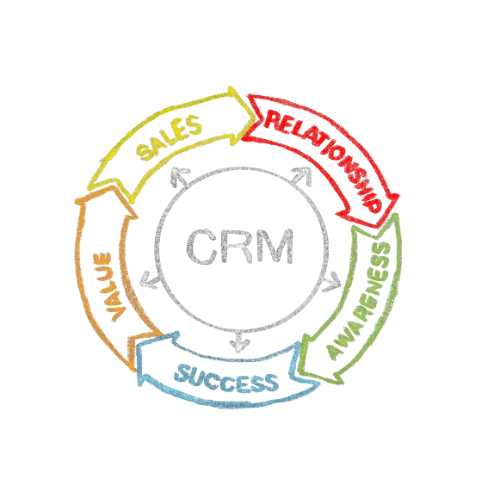
The phrase itself sounds technical and maybe a little boring. But the practical reality is straightforward.
Customer data management is simply the discipline of capturing, organizing, and actually using information about the people who interact with your business.
This includes the obvious things like names, phone numbers, email addresses, and physical locations. But it extends far beyond basic contact details into territory that directly impacts revenue.
Every conversation thread from email, text, phone call, or social media message. Every note about what the client actually needs and when they need it. Every record of where that lead originally came from, whether it was a Google search, a paid ad, a referral from an existing client, or a walk-in. Every update about where they currently stand in your sales or service process. Every detail about what services they've already purchased and what additional needs they might have.
When this information is scattered across personal devices, random spreadsheets, and isolated apps, your business operates with blind spots.
When it lives in one organized system that everyone can access, your business operates with clarity.
The difference between those two states is measured in lost revenue.
The Revenue Leaks You Don't See Until It's Too Late
The tricky thing about poor data management is that it rarely announces itself.
You don't get an alert that says a promising lead just chose your competitor because nobody followed up. You don't receive a notification that a previous client would have bought again if anyone had remembered to reach out.
Instead, you just notice that growth feels harder than it should. The conversion rates are lower than expected. The sales pipeline never seems quite as healthy as the volume of inquiries would suggest.
Here are the specific leaks that happen when customer data isn't managed properly.
Follow-up becomes inconsistent because there's no central record of who needs contacting and when. One team member assumes another handled it. Days turn into weeks. And by the time someone finally reaches out, the prospect has already moved on.
Response times creep up because staff waste minutes or even hours just hunting down basic information before they can reply to a simple inquiry. In competitive service industries, the first responder often wins the business.
Upsell and repeat purchase opportunities vanish because nobody has visibility into client history. A customer who bought one service six months ago might be perfect for another offering today, but that connection never gets made because the data isn't accessible.
Team handoffs create friction and erode trust. A client who already explained their situation to the salesperson now has to repeat everything to the account manager because notes weren't properly documented. It makes the business look disorganized and leaves the client feeling undervalued.
And leadership operates without reliable visibility. When data lives in disconnected silos, any attempt at reporting becomes an exercise in educated guessing rather than actual intelligence.
The Real Price of Patching Things Together
Many service businesses survive for years on what I'd describe as digital improvisation.
A spreadsheet here for tracking leads. A shared inbox is there for managing client emails. Personal phones are used for texting because it feels faster. A notes app filled with random thoughts from client calls. Calendar tools that don't connect to anything else. Maybe even a basic CRM that someone set up years ago, but nobody actually uses consistently anymore.
Each individual tool might work fine in isolation. But together they create an environment where information gets trapped in silos and context gets lost constantly.
The hidden costs stack up in ways that don't appear on any single report. Staff hours were burned switching between applications and searching for information. Leads that fall through cracks because no single system tracks everything end-to-end. Accountability becomes impossible because nobody knows who did what or when. Customer experience suffers because the left hand doesn't know what the right hand is doing. And ultimately, conversion rates that underperform relative to the actual opportunity.
The business feels busy. The team is constantly moving. But the productivity doesn't translate into proportional revenue growth.
How a Properly Configured CRM Changes the Equation
A CRM isn't magic. It won't automatically fix a broken sales process or make up for a weak value proposition.
But what it does is eliminate the friction that prevents good processes from working consistently.
Everything lives in one place. Contact records include not just basic info but the full history of every interaction. Communication threads are visible to everyone who needs them. Notes and context stay attached to the client record rather than living in someone's head or personal device.
Automation handles the repetitive follow-up that humans are terrible at remembering. When a lead enters the system, the right sequence can trigger automatically. A welcome message. A booking link. Timely reminders. Gentle nurture touches for those not ready to commit. None of it depends on someone remembering to click send.
Pipeline visibility becomes real rather than theoretical. You can actually see where every lead sits in the journey from initial inquiry to closed deal. You can identify bottlenecks. You can spot which stages are causing a drop-off. And you can coach accordingly.
Team collaboration improves because everyone works from the same source of truth. No more confusion about who owns which relationship or what the last conversation covered.
And reporting becomes useful rather than painful. You can track which lead sources actually generate revenue, not just vanity metrics. You can see response times, conversion rates by stage, and individual performance trends. You can make decisions based on data instead of intuition.
Businesses that want this level of operational clarity often migrate toward centralized platforms like the AutoMinds Tech CRM system that are designed specifically for service-based companies.
What a CRM Built for Service Businesses Should Include
Not every CRM fits every business model. A system designed for high-volume product sales doesn't always translate well to relationship-driven service industries.
The right CRM for a service business should include a few non-negotiable capabilities.
Contact and pipeline management that reflects how services are actually sold and delivered, not just generic sales stages that don't match reality.
Shared inbox functionality so teams can collaborate on client communication without forwarding emails back and forth or losing context.
Multi-channel communication support, including SMS, email, and messaging apps, so you can meet clients where they actually prefer to communicate.
Automated follow-up workflows that handle the repetitive parts of nurturing relationships while freeing humans for higher-value conversations.
Appointment booking that eliminates the tedious back and forth of scheduling.
Lead source tracking that shows you exactly which marketing efforts are generating real business outcomes.
Dashboards and reporting that surface the metrics that actually matter for service-based growth.
The goal isn't to accumulate features for their own sake. It's to create a system that reduces administrative friction while increasing visibility into what's actually happening across the business.
Different Industries Apply This Differently
While the core principles remain consistent, the specific application varies by industry.
Clinics and healthcare providers need to track patient inquiries, appointment history, follow-up care reminders, and communication preferences, all while maintaining appropriate privacy standards.
Agencies and professional service firms need visibility into proposal status, retainer agreements, project milestones, and ongoing client communication across multiple stakeholders.
Real estate professionals need to manage buyers and sellers through extended decision cycles while maintaining consistent nurture communication over months rather than days.
Solar and Home service companies need to handle estimate requests, job scheduling, technician dispatch, and post-service follow-up without letting inquiries slip through during busy periods.
Consultants and coaches need to manage discovery calls, proposal delivery, onboarding sequences, and ongoing engagement tracking.
The common thread across all these scenarios is that relationships move through stages, and context matters. A CRM preserves that context instead of forcing everyone to constantly reconstruct it from memory.
The Connection Between Good Data and Better Revenue

This is where the abstract concept of data management connects directly to financial outcomes.
When you can respond to inquiries faster because information is immediately accessible, more leads convert to conversations.
When follow-up happens consistently rather than sporadically, more conversations convert to booked business.
When client history is visible, repeat and expansion opportunities stop hiding in plain sight.
When reporting accurately reflects reality, marketing spend can be allocated toward what's actually working rather than what feels busy.
And when clients experience smooth, consistent communication across every touchpoint, they feel valued and understood. That experience drives retention and referrals in ways that no amount of advertising can replicate.
Recognizing When Your Current Approach Isn't Working
Some signs are obvious in hindsight but easy to overlook in the day-to-day rush.
Warm leads inexplicably go cold with no clear explanation. Team members regularly ask each other where certain client information lives. Follow-up depends on someone's personal system rather than a shared process. You're paying for multiple software tools that don't talk to each other. Reporting takes hours to compile and still doesn't feel reliable. Past clients are rarely contacted unless they initiate the conversation. Revenue feels inconsistent despite steady inquiry volume. Administrative coordination consumes more time than actual client-facing work.
If several of those resonate, the issue probably isn't effort or talent. It's infrastructure.
Why Expert Setup Matters More Than Software Choice
There's an uncomfortable truth about CRM implementation that many businesses discover too late.
The software itself is rarely the constraint. Modern CRM platforms are powerful and flexible. The challenge is configuring them in ways that actually match how a specific business operates.
This requires thinking through proper pipeline stages that reflect real sales and service processes. Automation logic that supports rather than frustrates. Team permissions that balance access with appropriate controls. Lead routing that gets inquiries to the right people quickly. Integration with existing tools so nothing gets orphaned. Message templates that sound human and helpful. Reporting dashboards that surface what leadership actually needs to see. And training that drives genuine adoption rather than reluctant compliance.
This is why many service businesses eventually partner with specialists who configure systems around actual operational goals. If you're looking for a CRM implementation tailored specifically to how service companies work, the AutoMinds Tech CRM solution is built with those requirements in mind.
Conclusion
Businesses lose revenue from poor customer data management, not because of one catastrophic failure but because of hundreds of small leaks that compound over time.
Leads that don't get followed up. Clients whose history gets forgotten. Opportunities that are hidden because information is scattered. Decisions made with incomplete visibility.
The solution isn't heroic individual effort or hiring more people to manage the chaos. It's building infrastructure that makes good process the default rather than something that requires constant vigilance.
A properly configured CRM serves as that infrastructure. It centralises information, automates the repetitive parts of relationship management, and gives everyone from frontline staff to leadership the visibility they need to make better decisions.
In an environment where service businesses compete increasingly on responsiveness and client experience, treating customer data as a strategic asset rather than administrative overhead becomes a genuine competitive advantage.
Frequently Asked Questions
What does effective customer data management look like for a service business?
It means having one central system where all client information lives, from contact details to communication history to current pipeline stage, accessible to everyone who needs it, with clear processes for keeping it current.
How much revenue do businesses typically lose to poor data management?
While exact figures vary by industry and business size, the combination of missed follow-ups, slow response times, lost upsell opportunities, and inefficient team coordination consistently adds up to meaningful percentage points of potential revenue left unrealized.
Is CRM implementation disruptive to daily operations?
Done thoughtfully with proper planning and configuration, the transition should create clarity rather than chaos. The key is matching the system to actual workflows rather than forcing the business to adapt to arbitrary software defaults.
What's the difference between a generic CRM and one built for service businesses?
Service-focused CRM systems prioritise relationship continuity, communication history tracking, and pipeline visibility across longer decision cycles rather than just transactional sales velocity.
How long before a new CRM system starts showing measurable impact?
Many businesses see improvements in response times and follow-up consistency within weeks of proper implementation. Full visibility into conversion metrics and pipeline health typically builds over the first few months as data accumulates and patterns emerge.
"There is nothing so useless as doing efficiently that which should not be done at all."
Peter Drucker (Management consultant & author)